

Single Bunk Bed With Mattress
Bunk beds are great for budget shoppers because they eliminate the need to purchase an additional box spring. They also provide a space-saving option for families who have smaller rooms or low ceilings.
Be sure to choose one that will fit over the top bunk's guard rails. The majority of heavy sleepers prefer mattresses that are firmer to ensure that their spines are aligned, while lighter sleepers like soft beds that ease pressure points.
Size
Bunk bed mattresses are available in different sizes to meet the requirements of different individuals and living spaces. The mattress size you choose will depend on the number of persons who will sleep on the bunk, and whether the bed's bottom is designed to accommodate either a daybed or trundle as well. You should generally avoid innerspring mattresses that require a boxspring as they tend to be heavier and can cause a noisy bunk bed.
You should consider a smaller bed for the top bunk if your bunk bed has one. This will prevent people from feeling cramped on the upper levels. Mattresses less than 6 inches thick can also be used for the top bunk. They will fit comfortably within the railings of the guard, reducing the risk of a fall. You can pick between twin XL mattresses or a full-sized mattress for the bottom bunk. The XL version is 5 inches wider than a traditional full mattress and works best for adults and teens.
To avoid accidents, the bottom bunk is required to be fitted with a bunk guard. This kind of guard is usually a metal frame that is secured under the mattress, so you can be certain that your child won't be able to get out of bed in the night. The guard should not be extended higher than the top bunk bed mattress, as this can pose a risk of being suffocated.
The bottom bunk is perfect for a daybed or trundle that can be used to accommodate an extra guest or a child, and you can find a variety of queen and twin mattresses. These beds are perfect for rooms that have small space. They also offer an attractive alternative to traditional bunk beds. These beds are also great for youth psychiatric centres and rehabilitation facilities that require a large number of patients in a single room.
A bunk bed that has a daybed or trundle is generally made to be smaller than other types of bunk beds, which helps reduce floor space and make the space feel more spacious. These types of bunk beds are typically less expensive than a conventional bunk bed that has two beds, and are available in a variety of styles to fit various tastes and décor.
single bed bunk with desk
There are a myriad of types and configurations of bunk beds. While standard bunk bed pairs two twin mattresses together (often called twin-over-twin), you can choose from a wide range of choices. Single bunk beds with mattresses let siblings share a space while keeping separate spaces, which is especially useful for smaller rooms. It is also possible to save space by stacking two beds. This allows you to make use of the floor for other furniture and decor like a dresser, or desk. Bunk beds are often found in college dorms, and in other shared accommodation. They maximize space while preserving the cozy ambience.
Picking a style that fits your room and sleeping needs is the first step to finding the perfect bunk bed with mattress that is right for you. The kind of frame you select will depend on how many people you'll be accommodating, as well as the ceiling height of your bedroom. You'll need to have between 33 and 38 inches between the top of the mattress and the ceiling to be able to sit comfortably.
Another factor that influences bed frame selection is how you want to get to the top bunk. While most bunk beds offer straight ladders to climb to the top of the bed, some models also have stairs that create a an elegant, seamless appearance in your bedroom. Staircases can also provide hidden storage options, such as built-in shelves or drawers, that help keep the room tidy and uncluttered.
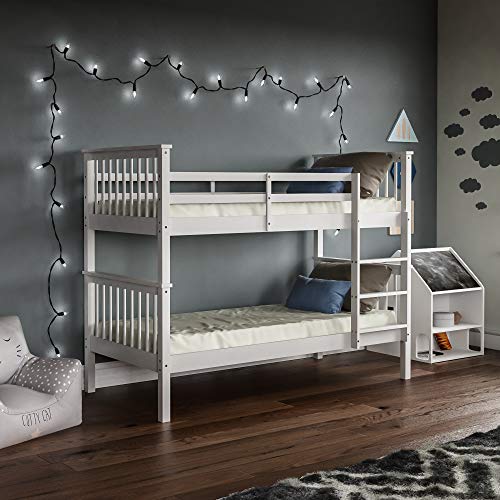
The most comfortable mattress for bunk beds for single sleepers are those that are thick enough to cushion their shoulders and backs without putting too much stress on their bodies. You may choose to choose an innerspring, hybrid or latex mattress. However memory foam mattresses are a fantastic option for bunk beds because they provide intense support that contours and are great for smaller-framed sleepers or those with joint and muscle pain.
Some bunk beds have an optional under-bed trundle, which is great for accommodating extra sleepers without impacting the room layout or compromising the floor space. It can be used as a sleeping surface for guests, or simply pull it out to make an extra bed for children who have sleepovers. This feature removes the need for an additional cot, futon or rollaway bed for entertaining overnight guests.
Safety
Bunk beds are a great way to maximize space in the bedroom, however they must be placed in a safe manner to avoid safety hazards. This means not putting them near blinds (especially cords) windows, ceiling fans, and lights to reduce the chance of accidents. You should also think about the placement of other furniture in the room and any storage needs.
A bunk bed should be positioned at least 16cm from the wall to avoid gaps that could keep branches. It should be equipped with guardrails on both sides of higher beds to prevent children from falling.
Mattresses also play an important role in bunk bed safety. Choose a bunk bed that includes mattresses that have been safety-tested. The mattress should not exceed 6 inches in thickness for the top bunk to be secure and comfortable, whereas for the bottom bunk, you need an 8-inch-thick mattress for the best comfort and support. Innerspring mattresses tend to be thicker than foam or latex, but you can find bunk beds that have mattresses that don't require a box spring, and come with quilted layers for extra comfort.
Another important safety factor is to ensure that the ladder to the bunk bed can be securely attached to the frame. It is crucial not to leave the ladder unattended and to teach your children to put it away when they go to bed.
Final check: make sure that the slats of your bunk bed are strong enough for the mattress. They should also not sag over time, which could pose danger to the people sleeping on it. Verify that the guardrails are free of any gaps that could trap a child’s head.
A bunk bed can transform any bedroom into a tranquil retreat that helps you sleep well and a fresh start in the morning. It must be treated as any other piece of furniture that means following maintenance guidelines and safety guidelines. By knowing the risks and taking steps to avoid them, you can cancel out these dangers so that bunk beds remain the way they were intended to be: a place where kids can dream up their ideals.
Mattress
The mattress you choose for your child's bunk bed can be a major difference in their sleeping. The size and type of mattress you pick will be determined by who's sleeping on the top bunk and the length of time you're planning to keep the beds. Selecting the most suitable mattress will make sure that your kids remain comfortable and could allow them to take the same mattress off to college with them.
You can pick from a variety of mattresses. By learning about the options, you will be able to find the perfect one for your needs. Some of the most common kinds of bunk bed mattresses include memory foams hybrids, and innersprings. You can also choose hypoallergenic mattresses, which are ideal for those with sensitivities or allergies.
Most bunk beds can accommodate twin-sized mattresses, however you can also find frames that can accommodate queen, full, and even king size mattresses for the bottom bed. A queen- or king-sized bed is ideal for adults and couples. Twin-sized or full-size mattresses are ideal for single sleepers as well as children.
Choose a foam mattress or an innerspring for your bunk beds. Many mattresses have good edge support. This is particularly crucial for the top bunk, as it makes it easier to get into and out of bed. Memory foam mattresses generally offer the most edge support, whereas hybrid and innerspring mattresses often have reinforced edges.
Another thing to think about when choosing a mattress to fit your bunk bed is the construction of the mattress itself. You need to ensure that the mattress is made of durable material and will last for a long time. Choose a mattress that has an easy cover to clean and wash in the washing machine.
Many bunk beds use mattresses made of foam or innerspring however there are some bunk bed frames which can be converted into desks, sofas, and other furniture pieces that can be used for multiple purposes. These kinds of beds usually have a futon-style mattress that can be folded up when not in use, and they might come in a variety of colors to complement the decor of your space.